The Concept
WELCOME!

Wolfgang Hauck
Artist and Initiator
For me, Venice is not a place of longing—it is a place of work. In 1993, I made my first international appearance there with the Lechwehrtheater, later renamed "Die Stelzer – Theater auf Stelzen," on St. Mark’s Square.
It was an experience that shaped me. And one that has stayed with me ever since. I’ve been back since 2022—with a new ensemble, new ideas, and an undiminished love for this city and its people. At the same time, I see what threatens Venice: mass tourism, the loss of historical substance, the exodus of Venetians.
What remains is a backdrop. What is missing is living culture. That is exactly what I want to change—not alone, but together with others. The idea: a palazzo in the heart of Venice that functions as a true cultural workshop. Exhibitions, studios, workshops, residencies, encounters. Open to artists, curators, cultural creators—and especially to people who live and work in Venice. I bring the experience, the vision, and the drive.
I’m looking for people who want to contribute their ideas, help shape the project, and share responsibility—and who are also willing to support the project financially.
If Venice is close to your heart and you believe in the power of culture: I cordially invite you to become part of this project.
Wolfgang Hauck
April 20, 2026
Or subscribe to our newsletter for regular updates on the project.
THE PALAZZO
The Palazzo Lezze Michiel is located on Campo Santo Stefano—one of Venice’s most famous squares, directly on the route from the Accademia Bridge to St. Mark’s Square.
The building has a history as an exhibition venue: it has been used on multiple occasions as a pavilion for the Art and Architecture Biennale, as well as for other art and design exhibitions. The infrastructure for public use is in place.
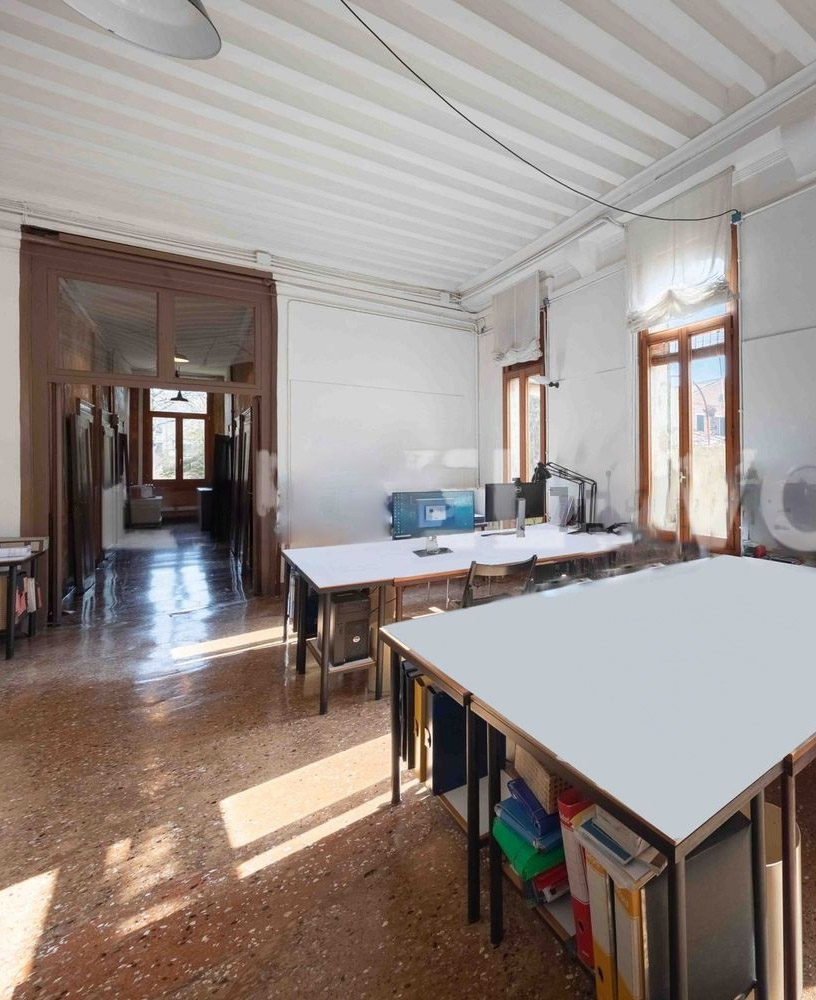
Six prestigious rooms are available for exhibitions, salons, workshops, and cultural events. On the second floor—the "piano nobile"—and in the converted attic, there are eight additional rooms for living quarters, artist residencies, and offices. The total area exceeds 800 square meters.
Amenities: 6 bathrooms, several bedrooms with over 14 beds, 2 fully equipped kitchens, and storage rooms for materials and exhibition equipment.
POSSIBILITIES
What is to emerge at this location is intentionally left open. There is no rigid program, but rather a framework that provides space for various participants and ideas.
Possible activities include contemporary art exhibitions, studios and artist residencies, international workshops, small conferences, and networking events.
One area that is particularly close to my heart: the international jewelry scene. Jewelry as an independent art form has hardly had a permanent place of visibility in Venice so far. That could change here. But that is just one example among many.
What should connect all these uses: quality, encounters, and the exchange between guests from all over the world and local Venetian life.
PARTICIPATION
The acquisition of the Palazzo—including closing costs and initial operating expenses—requires substantial overall financing, which is to be shared collectively.
The model is cooperative: participation takes the form of cooperative shares, enabling both financial involvement and active participation in shaping the project.
I would be happy to discuss the terms and conditions of participation in a personal conversation.
As a cooperative member
Participation
There are various ways to become part of this project—and not all of them are financial in nature.
The purchase of the Palazzo is being carried out through a cooperative. Those who subscribe to shares become co-owners, contribute to the financing, and have a say in the direction of the project. This is not a passive investment—but a decision to help shape a place.
As a local participant
Anyone who brings expertise, a network, or a concrete project idea is invited to engage with this space: as an exhibition curator, residency guest, workshop leader, or collaboration partner. The program is developed collaboratively—not imposed from above.
As part of the network
Even those who cannot be present on a permanent basis can be part of this project: through connections, recommendations, and exchange. Venice as a place attracts people—ArtLabVenice aims to be a node in this network.
Become part of a creative network and seize the opportunity to help shape the future of ArtLabVenice.
TIMELINE
2026 – Summer
Establishment of the operating company (S.r.l.) in Italy
2026 – Fall
Establishment of a cooperative in Germany as the legal basis for the acquisition.
2026 – Winter
Acquisition of the Palazzo. Start of planning for expansions. Waiting period until final transfer due to the City of Venice's right of first refusal (up to 90 days after purchase contract).
Spring 2027
First uses and events. The Palazzo opens its doors.
Background
Background

Wolfgang Hauck
Artist and Initiator
I have been working in the arts and culture sector for more than 40 years—across a wide variety of formats, genres, and countries.
For nine years, Landsberg am Lech was my base of operations: with a cultural office, a media workshop, and the administrative office of my theater. From there, together with the association "dieKunstBauStelle" and the theater "Die Stelzer," I realized more than 40 international cultural projects—theater, digital exhibitions, an international composition competition, anniversary concerts, cultural aid programs, film productions, and a HistoryApp.
These years have shown me how important a permanent space is for this kind of work—a starting point, a workshop, a meeting place.
When the building was sold in 2022, the question arose anew: Where to go from here? A place with an international focus, one that involves other actors and is more than just an office.
My answer was clear: Venice.
In 1993, I had my first international performance there with “Die Stelzer”—in St. Mark’s Square. That experience has never quite left me. I’ve been back since 2022, with a new ensemble and more ideas. My enthusiasm for this city remains the same.
Wolfgang Hauck
April 20, 2026
Stay informed: Subscribe to the newsletter
The Model: Borgo Batone
How did the idea come about?

The idea for ArtLabVenice didn’t come out of nowhere. I was introduced to the cooperative model in Borgo Batone, an Italian village near Lucca, and I’m a member of the cooperative there myself.
Borgo Batone showed me how powerful it is when many people pool their energy, ideas, expertise, and financial resources. Together, we can accomplish things that would be too big, too expensive, or too binding for any single person. The uncomplicated collaboration within a self-determined framework—both financially and in terms of activities—convinced me.
Particularly impressive are the synergies among over 90 participants: architects, artists, artisans, entrepreneurs, and cultural creators enrich one another and together create something greater than any individual could achieve alone.
For ArtLabVenice, I can draw on these proven structures —legally, fiscally, but also in the facilitation and organization of large groups. Borgo Batone is living proof that cooperatives work.
I recommend visiting the website:
borgo-batone.com
There you’ll get a sense of a community that has been working successfully for years.
Frequently Asked Questions
- FAQ about the ArtLabVenice project -
What is ArtLabVenice?
ArtLabVenice is a cooperative cultural project in Venice. Its goal is to acquire and operate the Palazzo Lezze Michiel on Campo Santo Stefano as a venue for art, exhibitions, workshops, artist residencies, and international cultural exchange.
Where is the palazzo located?
Palazzo Lezze Michiel is located on Campo Santo Stefano in the heart of Venice, directly between the Accademia Bridge and St. Mark’s Square. The Gallerie dell’Accademia, the Peggy Guggenheim Collection, Palazzo Grassi, and the Teatro La Fenice are all in the immediate vicinity.
How big is the property?
The palazzo has a floor area of approximately 25 × 25 meters. The total area of the portion being offered on the ground floor, the second floor (Piano Nobile), and the attic currently exceeds 800 square meters. The area measurements are currently being precisely determined based on floor plans and surveys and will be described in detail in the next step.
Please note: In the attic, areas with low ceiling heights—particularly those under approximately 1.50 meters—are generally not counted as usable floor area. The actual usable floor area is therefore significantly larger than the calculated figure. The Piano Nobile features seven prestigious rooms for exhibitions, salons, and workshops. This is complemented by living spaces, an office, a studio, and two kitchens.
The attic floor includes additional rooms suitable for living, artist residencies, or offices. The facilities include six bathrooms, several bedrooms with a total of over 14 beds, two fully equipped kitchens, and storage rooms. The first floor is used by an internationally renowned art gallery
How can I get involved?
There are various options: as a cooperative member by subscribing to shares (financial participation with voting rights), as an on-site contributor (exhibition curator, workshop leader, residency guest), or as part of the network through connections, recommendations, and exchange.
What is the cooperative model?
The acquisition will be carried out through a cooperative. Members purchase shares and become co-owners. The model is democratically organized (one member = one vote) and enables both financial participation and active involvement in shaping the project.
When does the project start?
The timeline is as follows: Summer 2026—establishment of the operating company (S.r.L.); Fall 2026—establishment of the cooperative; Winter 2026—acquisition of the Palazzo, waiting period until final transfer due to the City of Venice's right of first refusal (up to 90 days after purchase contract); Spring 2027—first uses and events.
What uses are planned?
Planned activities include contemporary art exhibitions, studios and artist residencies, international workshops, small conferences, and community gathering formats. A special focus is placed on the international jewelry scene as an independent art form.
Who is behind the project?
The initiator is Wolfgang Hauck, an artist and cultural practitioner with over 40 years of experience in the arts and culture sector. He has realized more than 40 international cultural projects, including theater productions, exhibitions, workshops, and digital formats.
What is the history of the palazzo?
Palazzo Lezze Michiel has been used on multiple occasions as a pavilion for the Art and Architecture Biennale, as well as for other art and design exhibitions. The infrastructure for public use is already in place.
How do I get to the Palazzo in Venice?
The Palazzo is centrally located between the Accademia Bridge and St. Mark’s Square on Campo Santo Stefano. It is just a few minutes’ walk from the Accademia Bridge. The nearby vaporetto stations on the Grand Canal offer direct connections to Piazzale Roma, the train station, and the airport.
How many people can stay at the Palazzo?
The palazzo offers accommodations for over 14 people in several bedrooms. With 6 bathrooms and 2 kitchens, the property is ideal for groups of artists, residency programs, workshops, or cultural events with multiple participants.
Does the cooperative model really work?
Yes, absolutely! I first encountered this model in Borgo Batone (Italy) and am a member of the cooperative there myself. For years, the cooperative has shown me how the combined energy, expertise, and financial strength of many people make projects possible that would be too large, too expensive, or too binding for individuals.
I particularly appreciate the uncomplicated sense of community within a self-determined framework—both financially and in terms of activities. The synergies among over 90 participants are an incredible asset. For ArtLabVenice, I can draw on these proven structures.
More information: borgo-batone.com
The exact amount of the cooperative shares is still being determined, as negotiations on the final purchase price of the palazzo are still ongoing. Once the purchase price is finalized, we can provide precise information on the share amount.
By expressing your interest, we will keep you informed about the current status and notify you as soon as concrete figures are available.
As a cooperative member, you have diverse opportunities to use and shape the palazzo:
- Use of spaces: For your own work, stays, projects, courses, or exhibitions
- Artist residency: Accommodation and workspaces for creative projects
- Participation in events: Exclusive access to exhibitions, workshops, and cultural events
- Co-creation: Active participation in program design and strategic direction
All details will be defined according to the agreements of the future cooperative and communicated transparently.
The Palazzo
The property brochure and a video about the project are currently being prepared.
Location in the neighborhood
Campo Santo Stefano is located in the cultural district between the Accademia Bridge and Piazza San Marco. Venice’s most significant art institutions are concentrated in the immediate vicinity: the Gallerie dell’Accademia, the Peggy Guggenheim Collection, Palazzo Grassi, and Punta della Dogana. The Teatro La Fenice and numerous historic churches housing significant works of art round out the cultural infrastructure. The central location offers excellent access to all major transportation hubs while being nestled in the city’s historic and artistic heart.
Palazzo Lezze Michiel
The Palazzo Lezze Michiel is a fine example of late Venetian Gothic – a style that could only have emerged here: Gothic forms, Byzantine and Islamic influences. Slender columns, pointed arches, openwork tracery. John Ruskin described the two balconies facing the square, with their eight columns, in *The Stones of Venice* (1851–53) as the pinnacle of medieval architecture. For him, this architecture was not mere ornamentation, but an expression of a living craft tradition. In the inner courtyard stands a stone fountain head from the 15th century – a testament to the connection between the Lezze and Michel families. The building has a history as an exhibition venue: it has been used on several occasions as a pavilion for the Art and Architecture Biennale.

Room
One of the state rooms
Exterior
Entrance

Impressions
The central kitchen

Impressions
Bedrooms

Photos
Indoor terrace

Impressions
State Hall

Impressions
State Hall

Impressions
A bedroom
Interested?
Two ways to stay informed
Subscribe to the newsletter
Receive regular updates on project progress, events, and opportunities to get involved.
Contact us directly
Use our contact form for specific questions about participation or the project.
Expression of Interest
Please express your interest using the form below
Mailing address
Wolfgang HauckWeilheimer Str. 6d
86899 Landsberg am Lech
Germany